
Overcoming GAMSTOP and Bank Gambling Blocks
 Available in GB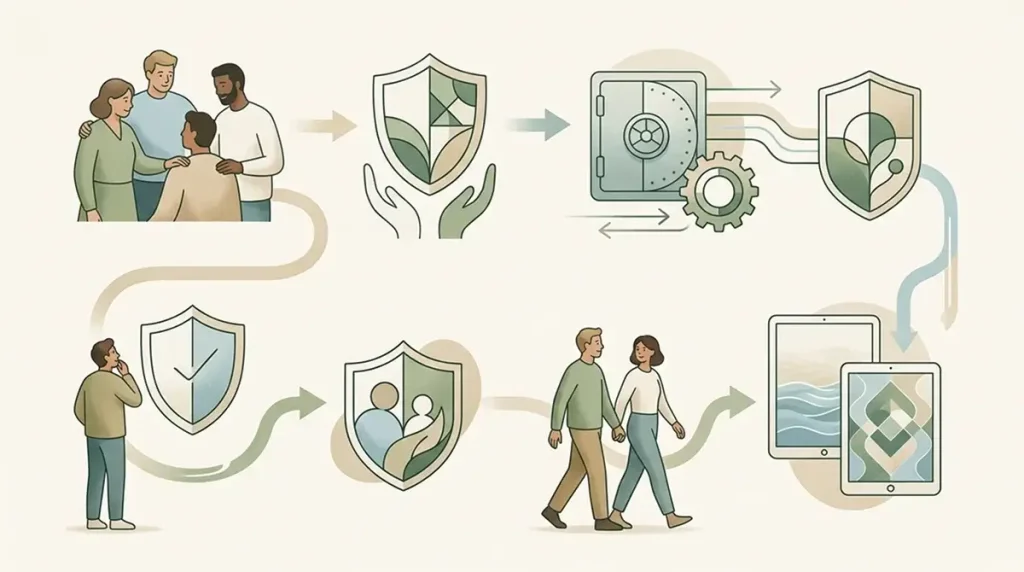
If you are looking at gambling sites because GAMSTOP, a bank block or another limit is stopping you, the safest first step is not to compare account features. Protection tools are there to support a boundary. This page gives a calm route through self-exclusion, bank blocks, blocking tools, money pressure and support options without turning those safeguards into barriers to remove.
Managing Self-Exclusion and Casino Deposit Blocks
The phrase “casino not on GAMSTOP” can be used in very different situations. One reader may simply be trying to understand what the phrase means. Another may be self-excluded, blocked by a bank, dealing with debt, chasing a loss or trying to gamble at a moment when stopping feels hard. Those situations are not the same, and they should not lead to the same next step.
If you are self-excluded, the important question is not how to find a different route into gambling. It is how to keep the protection working while the urge passes. Self-exclusion is described by the Gambling Commission as a formal agreement not to gamble. GAMSTOP is connected with online self-exclusion for participating gambling businesses licensed in Great Britain. That protection should be treated as a boundary that you chose or needed, not as a technical problem.
A useful pause can be practical rather than dramatic. Close the gambling page, do not open a new account, avoid sending identity documents or payment details, and move to a support resource. If money pressure is involved, use money or debt guidance rather than a promotion. If a bank block has stopped a gambling payment, treat the block as information: your account is helping interrupt a risky action.
Decision path and resource map
| Situation | Safer first action | What not to do |
|---|---|---|
| You are registered with GAMSTOP or another self-exclusion tool. | Use official self-exclusion and support pages, and reinforce the boundary with blocking tools where appropriate. | Do not look for a site because it appears outside the scheme. |
| A bank gambling block stopped a payment. | Contact your bank through its normal support route if you need help keeping the block active or understanding account controls. | Do not search for a payment route that undermines the block. |
| You are trying to recover losses. | Step away from offers and use money or debt guidance such as Citizens Advice or MoneyHelper. | Do not treat bonuses, higher limits or different payment methods as a repair plan. |
| You feel unable to stop or feel pulled back in. | Use specialist gambling support such as GamCare, TalkBanStop or GambleAware through their current official pages. | Do not keep reading gambling terms while the urge is strong. |
| You are worried about someone else. | Use support pages that explain how to talk about gambling harm and how practical blocks can help. | Do not try to investigate by creating accounts or testing sites for them. |
Self-exclusion is a safeguard, not a shopping filter
Self-exclusion works best when it is treated as a serious decision. It is not a sign that a person has failed, and it is not a mark of shame. It is a practical tool for a period when gambling should be stopped. That is why the language around non-participating sites matters. Copy that presents non-GAMSTOP access as a benefit can pull attention away from the protective purpose of the exclusion.
If you recognise yourself in that situation, make the next action smaller. You do not have to solve every gambling or money problem at once. You can close the site, move away from the device, ask someone you trust to sit with you, and open a support page instead of a gambling account. If the urge returns, repeat the same short route. The aim is to reduce immediate exposure while support tools and advice become easier to use.
Do not rely on willpower alone if the pattern has repeated. Layered protection is often more useful: self-exclusion, bank gambling blocks, blocking software, reduced access to payment details, and clear conversations with support organisations. TalkBanStop is specifically useful as a combined route because it brings together adviser support, blocking software and GAMSTOP self-exclusion support through verified support resources.
Bank gambling blocks and blocking software
Many banks offer gambling transaction blocks, and official guidance points readers toward checking what their own bank provides. The exact controls can vary between banks, so it is not safe to assume that every block works in the same way, covers every payment route, or has the same cooling-off behaviour. The useful action is to use your own bank’s current information and ask for help keeping the block effective if you are tempted to remove it.
Blocking software can help reduce exposure to gambling websites, especially when used alongside self-exclusion and bank controls. It should not be treated as a perfect technical shield. It is one layer among several. A person who is strongly tempted may still need human support, debt guidance, and practical changes to how they use devices and payment accounts.
If you already have a bank block or software block and are trying to undo it at a difficult moment, delay the change. Put a short barrier between the urge and the action: step away from the device, contact a support resource, or ask someone trusted to help you keep the block in place. That is a protective decision, not a moral judgement.
If you decide to proceed after your self-exclusion period ends, ensure you understand the strict ID checks and withdrawal rules enforced by international sites.
Money pressure changes the decision
Gambling should not be treated as a way to manage debt or repair a financial problem. If the reason you are looking is rent, bills, overdraft pressure, borrowed money or an attempt to recover a recent loss, commercial checks are the wrong priority. A promotion can feel urgent in that moment because it looks like a route back to normal. In practice it can add another layer of risk, especially if the terms include wagering requirements, expiry rules or withdrawal restrictions.
Citizens Advice and MoneyHelper provide guidance around gambling-related money problems and debt. Use those routes before reading further account terms. If the situation includes a disputed gambling withdrawal, keep that dispute factual, but do not use the possibility of recovering money as a reason to keep gambling. A complaint route is not the same as a plan to solve debt.
How this page differs from commercial checks
There are pages on this site that explain payments, identity checks and withdrawals and bonus terms and complaints. Those pages are for readers who are calmly assessing practical risk. They are not the right next step when the reason for reading is self-exclusion, a bank block, loss chasing or loss of control. In those situations, support comes first.
For the general meaning and boundaries of the phrase, read what “casino not on GAMSTOP” means before you click anything. If you still decide to read other checks later, do it only after the immediate pressure has passed and only if it does not undermine protection you already have in place.
We strongly advise seeking support, but if you need factual information, our guide to gambling outside Gamstop provides objective advice.
- Main guide
- Meaning and first checks
- Payments, ID and withdrawals
- Bonus terms and complaints
- Privacy and reporting checks